
Our latest observations on all things running
Our News
15.06.25
The pursuit of speed – playing the long game
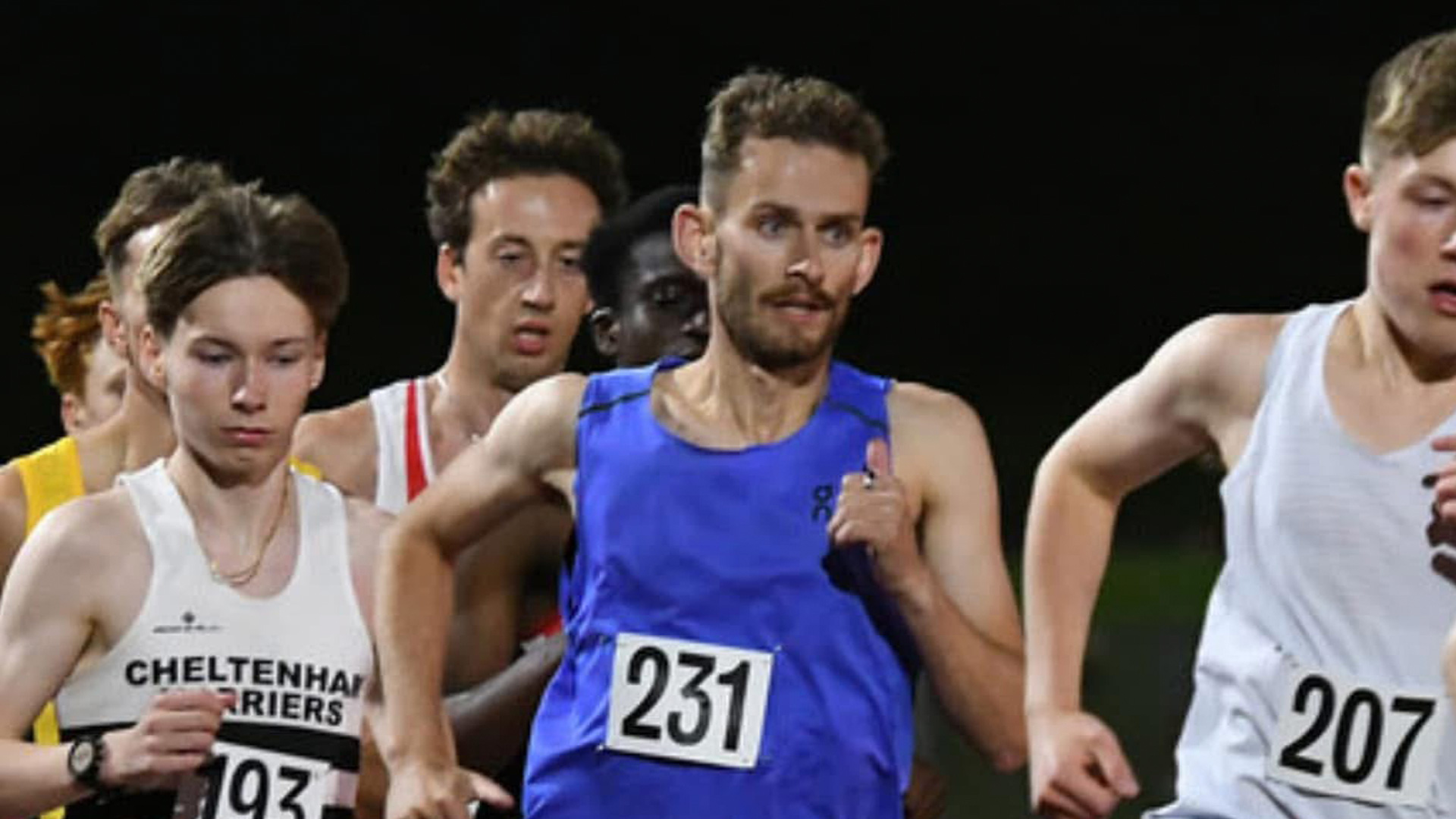
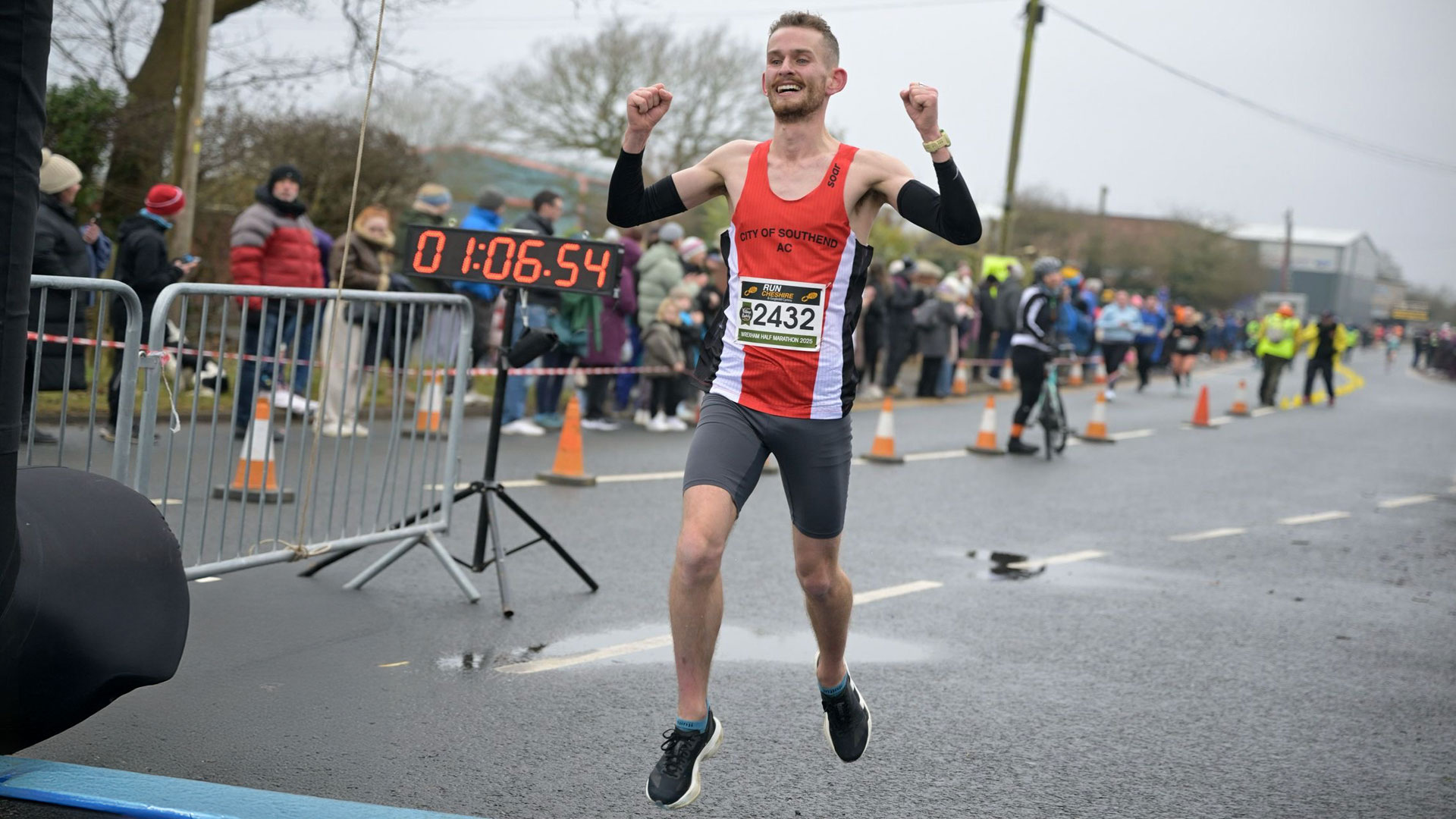
You’ve come a long way in 12 months when a 20-second improvement on your PB and last outing over 5km is a bit of a disappointment. That happened in last Friday’s Battersea Park race, and it puts a bit of a line in the sand for Bob Sporle in finishing off his winter-to-spring campaign; it’s resulted in significant PB rewrites. A half-marathon at 1:06.55, a 10km at 30:04, and last night’s 5km at 14:47, marking a 20-second improvement.
His objective through the winter and early spring months was simple – to raise as high as possible his LT1 and LT2 paces, ‘shifting the graph to the right’. As the cliché goes, focus on the process, and the outcomes will take care of themselves, and that’s what happened; he did the appropriate work to improve his physiological parameters and the results came.
The blend of better sessions through this winter period was essentially a mix of LT2 and VO2M, a consistent theme being the progressive nature of both of these, as the weeks and months clicked by, he was either increasing the total interval distance run in these sessions, or we reduced the recoveries between the intervals being run.
In addition to this, from the beginning of the New Year, ‘double threshold Tuesdays’ (DT) became a thing. I think everyone reading this will be well versed on the general whats and whys regarding DTs, but our specific rationale hinged on the simple fact that we wanted to progress
Bob’s mileage, and these DTs on average were near 33km days, and underpinning this was that he was now super comfortable with 125–130km weeks, so he was in a position to progress.
We also shuffled the pack here, moving his second hard session from a Saturday to a Friday, which allowed more recovery time before the traditional Sunday longer run, which we could then progress in both distance and, on occasion, pace, if the company was right and he felt good. There were a couple of occasions when he got to 32km or so, covering the ground at an average of 3:27–3:32 minutes per km, right in that LT1 sweet spot. One thing to note is that Bob operated on a two weeks on one week off cycle through this period, so he might do two weeks at 147km followed by an easier week at 90km, during the easier week we would reduce the threshold on a Tuesday to a single session, reduce some mid-week miles and reduce the length and speed of that Sunday effort. But… that VO2M session remained consistent. (Shhhhh, because that’s where the gold is).
Now there’s a saying, “if it ain’t broken, don’t fix it”. But you can’t expect to keep dishing out 145km weeks and DTs and expect to maintain the rate improvement you’re seeing. First off, there has to be the question of can he, from a muscular skeletal and homeostatic perspective, can continue to stand the strain. Then continue to adapt and improve on the same lines, I doubt it. I believe the law of diminishing returns is alive and well here. We need to come away from the volume and the LT work if he’s going to continue to improve from it at the same rate further down the line.
In short, we’re going to compromise his fantastic aerobic position in pursuit of speed. We are playing the long game…
During the summer months we’ll cut him from 10–11 run sessions per week, to 6–7 reducing his total run volume to 60–70km, through the winter and spring there was a single strength and conditioning set taking of about 30 minutes, we will introduce for the summer three separate sessions each taking approximately 30 minutes, one each covering strength, core, and plyometrics.
We sort of did this last summer, and what we noticed when going back to the winter work is that yes, he’d lost a fair bit of his aerobic capability, but the position recovered really quickly, within six weeks, and we’d surpassed the previous winter’s numbers in eight weeks.
Now, as well as a bit of a break from volume, the summer gives us quite a lot more. We carve a better physical being. The greater level of gym work, and the key sessions I’ll describe shortly, lead to a number of things, primarily better form (technique), improved speed reserve, and associated efficiencies. He gets stronger and faster, optimises his range of movement and strength throughout that range of movement. He gives himself a platform to be a better runner.
His focus will be on 3,000m migrating to 1,500m and then 800m as the summer season progresses. What we’ve not done before is set firm targets in this phase. If I’m asking someone to work this hard, they should know what I expect the outcomes will be. If they do the work and it doesn’t come off, then they can rightly have a discussion with me about my decision-making and the value I bring. Bob’s weekly work in better sessions will be a weekly high-end VO2M session, and we will then alternate weekly 1,500m and 800m pace sessions. From a performance perspective, we are talking 8:05–8:10 minutes (3,000), 3:47–3:49 (1,500) and 1:54 (800)
We’re approaching a thinner end of the wedge from a performance perspective; improvements aren’t going to be so grand, and they’re going to be harder fought for. So we’ve sharpened the focus on session targets, for VO2M sessions will be at 8:07 minute pace covering between 4,800- 5,800m total interval distance in a session at 65 seconds per lap, for 1,500m, between 3,200–3,800 total interval distance at 3:45 minute pace 60 seconds per lap, and for 800m a total interval distance in a session of 1,600–2,000m at 1:52 minute pace 60 seconds pace, 56 seconds per lap.
It’s been an interesting three years helping what was a relatively recreational endurance enthusiast to this point, I think now a greater degree of accountability for both of us is appropriate, he needs to know I’m not selling him short in his desire to be a 1:03 half-marathoner, and 28 minute 10km runner, I simply need to be applying an appropriate level of time and thought to what he’s doing, how, why, and when. For Bob, if I’m going to do all that, then this needs to be his focus, he needs to continue with his really high standards in terms of how he lives his life to allow for the type of training load he’s taking on, and he need to give adequate focus to the pieces of the jigsaw that are perhaps less enjoyable for him, the mobility, core, strength and plyometric work. These things will make the biggest difference.


05.11.25
What is Lactate Threshold and how does it relate to training?

24.09.25
End of season update for Luke Oliver
12.09.25
Marathon training and performance – cutting the wheat from the chaff
01.07.25
Running a fast half-marathon…
15.06.25
The pursuit of speed – playing the long game
01.06.25
800m, you’ve changed bruv!
01.05.25
Some musings from a week of endurance coaching on the Algarve…

01.04.25
Let’s talk recovery!
01.03.25
Preparing one of my guys for a season over 800m
01.02.25
Big breakthroughs and higher-level performances do not happen by chance.
01.11.24
Ironman Barcelona – It doesn’t always go to plan
1 / 5