
Our latest observations on all things running
Our News

12.09.25
Marathon training and performance – cutting the wheat from the chaff
The more you know, the more you know you don’t know… This is reflected as we get older, with longevity and experience, what comes is less certainty, things more often than not will be shades of grey rather than black and white. That is at least true for the more intelligent people I have met.
As a coach who has now invested more than 20 years in education and certifications, as well as drawing on my own experiences of more than 40 years as a competing athlete, and also the experiences of those around me, I am consistently amused by the rise of the running influencer; it’s a constant source of amusement. It is ‘the must-do sessions if you want to break 20 minutes for 5km…’ or the ‘must take supplements to improve your VO2’. In years gone by, to get the kind of influence reach that these folk have, you had to author a book or get published in some other way, which took serious accreditation and validation. Unfortunately, those times have gone, and we are where we are. In an age of information, it should be easier for people to understand and differentiate what is legitimate from what is a fallacy.
The simple truth here in the context of running is that with all of this information and advances in technology, such as shoes and nutritional supplements, you would expect performance levels for the masses across the age ranges to be improving, but they’re not, they’re some way off and not getting any closer. What I have tried to do below is give a perspective on a few things I consider to be important in helping/coaching people get faster, if that is what’s important to them. Being a part custodian of someone’s hopes and aspirations is no small obligation; this I respect and work to the best of my ability to make possible. It is that accountability that is the crux of the relationship between an athlete and coach, not forgetting that accountability is a two-way street with equal obligation shared.
I am going to draw on two engagements I have with two quite different but talented athletes, both with marathon goals. A high-level view of what we are doing and what we are aiming for. Steve is a 2:40 marathon runner looking to push to sub 2:30, training at peak, he runs ten sessions per week covering circa 150km. Judy is looking to make a comfortable GFA (60–64) qualification to cover all the World Marathon Majors, including Boston. Judy runs four or five sessions per week covering 45–80km.
Duration of specificity
For most people who take their running seriously and marathoning is their thing, they are realistically only going to focus their attention on one or two marathons per year, spring or autumn, or both if two is for them. Some do more races, but in terms of higher-level performance expectations, one or two tops is the de facto. If we try to define the specific period where a runner is preparing or building specifically towards their goal race, for me this should be around 17–21 weeks. If they have an extremely high level of fitness, then perhaps 13–15 weeks can be really effective too. Steve came to me with a view to running well in an autumn marathon thirty weeks prior to his goal race, which allowed us to do something useful, more on that later. With Judy, the coaching request was different: help me get ready for my autumn race (Eyri Marathon), but the real goal is to make sure I achieve GFA status from a marathon in spring for when I turn sixty later that year.
Periodisation and building towards race day
I operate a periodised model with all my athletes, and my approach to marathoning is no different; for the marathon it is a model with four distinct periods or mesocyles.
1. Endurance build
2. Lactate threshold and endurance
3. Race readiness
4. Taper and race
It’s fairly easy to decipher what is going on in each of these phases, the monikers give it away, but as an example, Steve is just starting phase three at this time, so in terms of priority workouts during a week, he is alternating between a Double Threshold session one week and a Marathon Race Pace (MRP) continuous effort the next. For Judy aiming at the Eyri Marathon things are a little different for LT threshold development we are focusing on a long Hill Repetition session and some club track workouts as the social and community aspect is really important to her but we have also been building a Kenyan Hill set increasing the distance of this session as she progresses, this session is important both in phase two and three.
Managing the hard yards
These challenging sessions that bring about the physiological, physical, and neural changes we’re looking for in order to get faster are hard but in the context of training for higher level marathon performance we’re not doing this multiple times per week, the MRP session will happen every second or third week for a 6–8 week period and the Double Threshold will happen 3–4 times over a 6–7 week period. The rest of the running and a sizeable portion of the total volume is what we can term either easy/recovery or steady, both serving a huge purpose in achieving the overall race goal.
You are what you eat
As the saying goes, no amount of training gives you the ability to outrun a bad diet. How I wish that wasn’t true. Also, back to influencer bashing, no amount of cordyceps, beetroot and turmeric shots, or super smoothies are going to make you any freaking faster either. In my experience, most athletes know exactly what they should do in terms of their general eating habits, eat as clean as possible at the most appropriate times.
To define this a little further, we can look at this as fuelling to complete our sessions and then optimising our position for recovery from the hard work we put in. In terms of fuelling, easily digested foods containing complex carbohydrates and a small amount of protein 2–3 hours before exercise and perhaps a small amount of light simple carbs shortly before to prime the pump. Following a session, particularly a longer or harder one, the glycogen window and catering to its whims is critically important. Get some calories on as quickly as possible; a protein shake with a small amount of complex carbohydrate is ideal. Getting this on quickly will keep that window open a little longer, allowing time to prepare something more substantial. This again needs to be protein-based with a small amount of complex carbohydrate. The importance of getting this more comprehensive sustenance onboard within an hour or so cannot be stressed enough; it genuinely makes a difference. Getting calories onboard during a marathon is a little more challenging. If a higher level of personal performance is the goal, then we need to fuel it effectively during the race, which means taking on board appropriate calories and being able to digest them whilst avoiding gastric distress. The amount of calories we need to take on during the race is calculable; however, more often than not, there is training involved in understanding what energy products will work for an individual and to some degree, training time spent acclimating our digestive system to take on, absorb, and convert these calories to energy. Optimising the carbohydrate store before the race is a science in itself and one I’d really like to cover in more detail in a later post, but for now, I’ll just consider in-race fuelling requirements. Picking Steve as an example this is how I see it, using the very simple equation of 10g of Carbohydrate per kg and Steve is about 63kg it means to fuel effective performance for a race at LT1 for a 2:30 hour finish he’s going to need to consume a typical gel at the start, then at 30 minutes, 55 minutes, 80 minutes, and 110 minutes and effectively absorb them around fulfilling his hydration needs. Fuelling a marathon is a tricky and sometimes sticky business.
Rest and recuperation
Structuring an individual’s training to facilitate improvement is as much about providing ample time for recovery as it is about providing the workouts; in simple terms, allowing appropriate time for the stress, recover, adapt, improve cycle to operate its continuum is critical. It is not always easy to achieve this, but I kind of live by the mantra here that if there is ever a question of doing more or less, do less.
When Steve joined the group, I had familiarity with his background as a runner, and what I’d noted of his training in the weeks and months before we engaged really shaped the early part of our engagement. The very first thing I said to him was, ‘I’m going to take you backwards before I take you forwards’. In Steve’s training, I noted a super high consistency in volume; he would for weeks or months on end knock out 140–150km weeks, lots of long runs with a number of them at MRP or very slightly quicker. I was a little concerned by the blend, a lot of grey zone running, but moreover, the lack of recovery, this takes its toll, not only our muscular skeletal system, but everything that supports our being, our respiratory system, immune system, endocrine system, gastrointestinal system, and in effect our CNS. I had 10–12 weeks with Steve before we commenced his marathon build. During this time, I cut his mileage by 40–50% and added greater polarity to his training, slowing his easy runs down and adding in a weekly VO2M session and even the occasional 1,500m style workout. What I was doing was making sure his body was fresh and in an optimal position to start training, and by changing the angle of attack, working on other areas of his game that had been neglected in his pursuit of marathons and ultras. With Steve now in the thick of the build, we are operating three weeks on, followed by a recovery week with roughly a third of the volume and a quarter of the intensity taken out. With Judy, it’s a little different as she operates on four days running each week, with us squeezing in the occasional fifth run. Judy’s on periods will stretch for 4–5 weeks as she is getting more recovery in the week, and after each longer or harder day, she will typically take the following day off.
Doing the math for race day
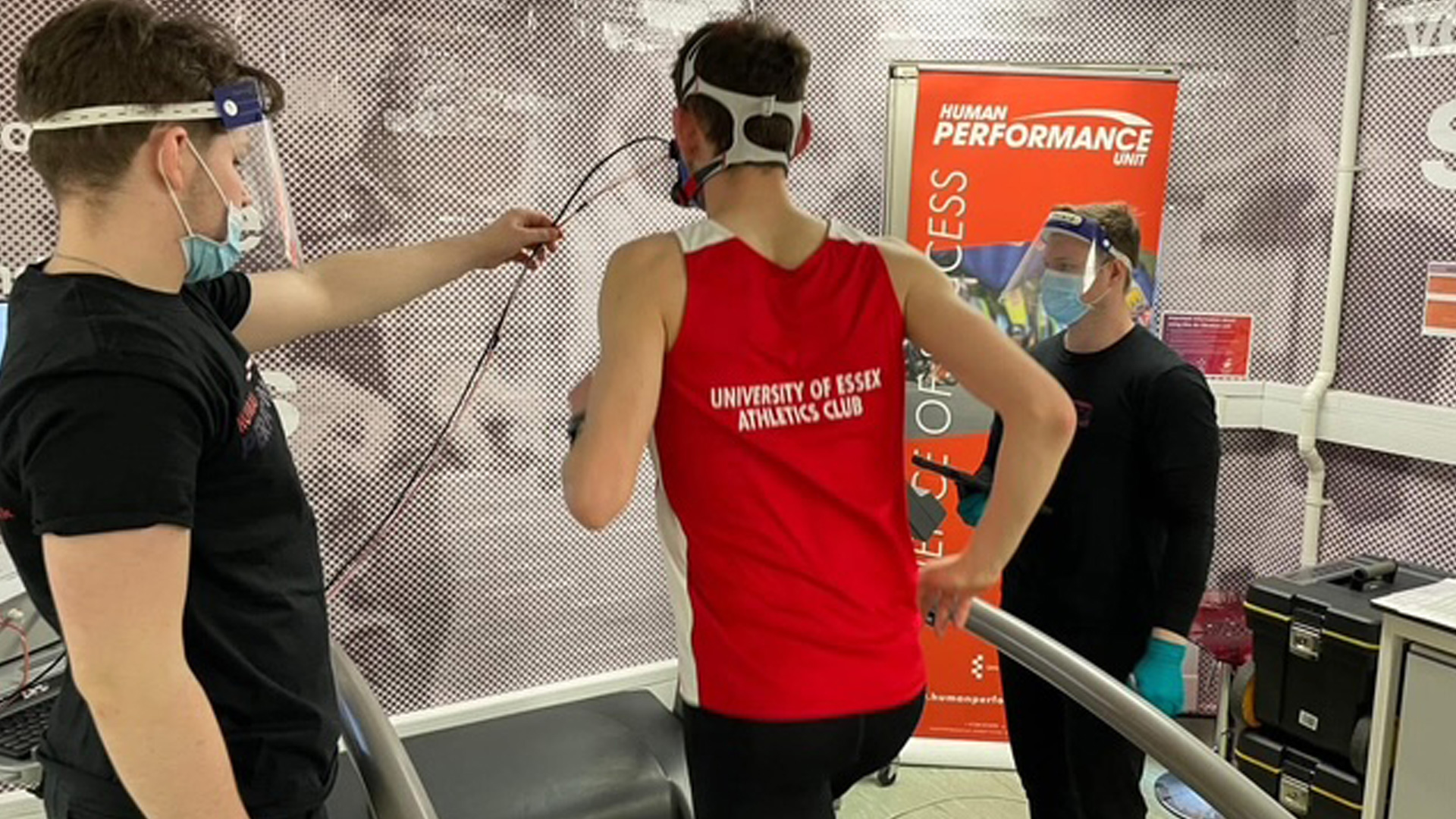
For those of you who have taken the time to read my stuff before, you’ll know I love testing. We get the data, it provides us with some information, and hopefully that gives us the insight to direct our training, both the blend and the paces we should operate at to bring about the improvements to increase our performance potential. What is so interesting about the marathon is that in terms of race day performance, if we get this wrong by over-cooking it even slightly, it can have catastrophic consequences on our finish time objectives, falling apart over the last six miles can literally obliterate a race. What testing allows us to do is specifically identify our race pace, target HR, etc, it allows us to form a race plan. Now, as Mike Tyson once famously said, ‘everyone’s got a plan until they get punched in the face’, marathoning is a lot like that. The weather, how we slept, our level of hydration, blood sugar level, etc, will all impact both target pace and HR they are not perfect indicators, but they are indicators. During our training, we do a sizeable portion of running at the target MRP. This should give us a sense of feel for it and the level of exertion we’re applying; this sense of feel is so important in getting it right on race day.
Thanks to those who read this far, I hope you found it at least a little interesting.


05.11.25
What is Lactate Threshold and how does it relate to training?

24.09.25
End of season update for Luke Oliver
12.09.25
Marathon training and performance – cutting the wheat from the chaff
01.07.25
Running a fast half-marathon…

15.06.25
The pursuit of speed – playing the long game

01.06.25
800m, you’ve changed bruv!

01.05.25
Some musings from a week of endurance coaching on the Algarve…

01.04.25
Let’s talk recovery!
01.03.25
Preparing one of my guys for a season over 800m

01.02.25
Big breakthroughs and higher-level performances do not happen by chance.
01.11.24
Ironman Barcelona – It doesn’t always go to plan
1 / 5