
Our latest observations on all things running
Our News
01.02.25
Big breakthroughs and higher-level performances do not happen by chance.
I have been coaching runners and triathletes for longer than I care to remember now. One of my guys had a breakthrough race last week, and two or three of the guys/girls in my more recreational group have asked the question about what it takes to progress that quickly, and could anyone do it. My answer was this: not everyone, but for many, if they want it badly enough, it is more than feasible. In more than a few words, I have scribed what I think it takes, a sort of road map.
Breaking new ground over the half-marathon.
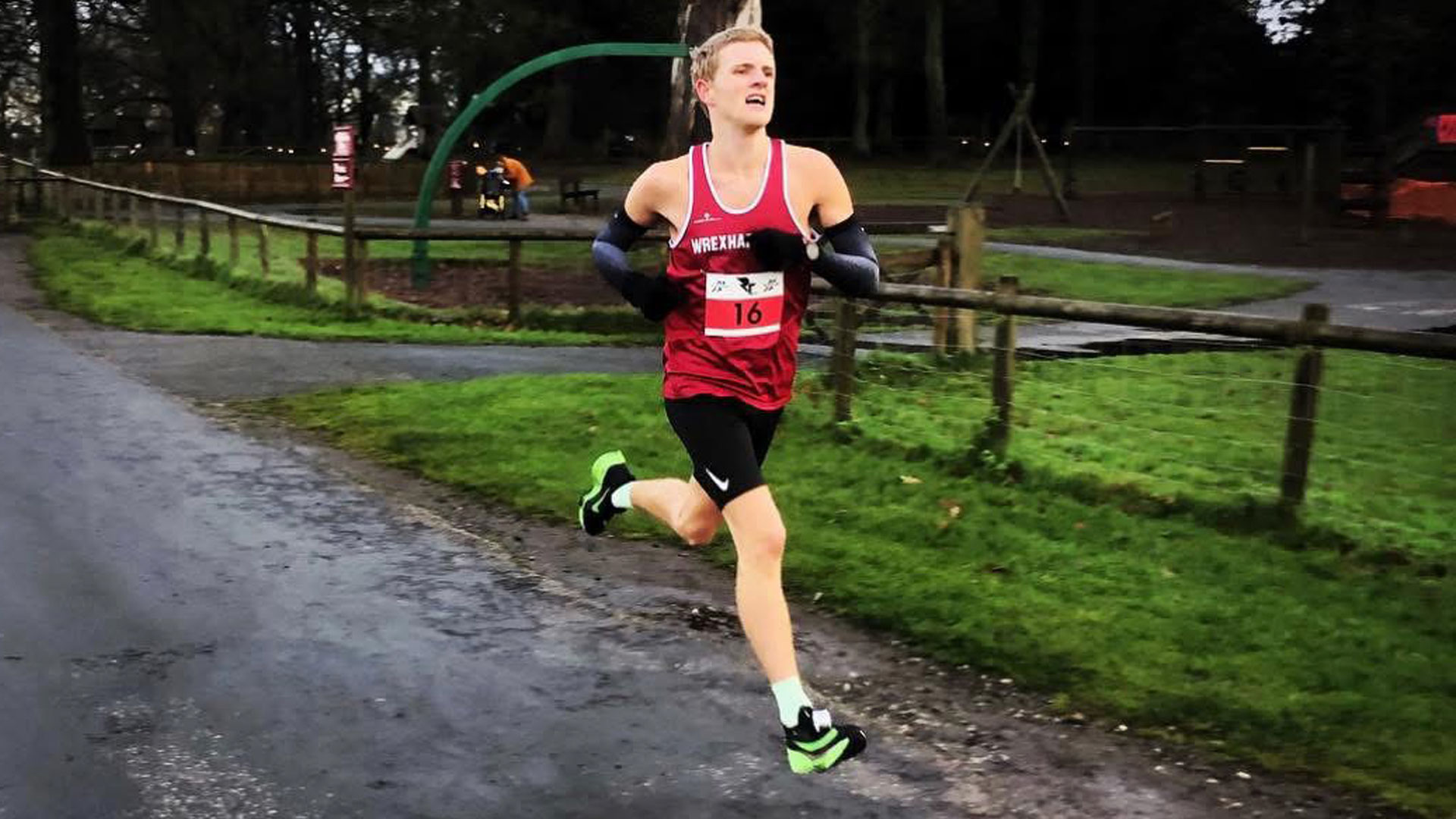
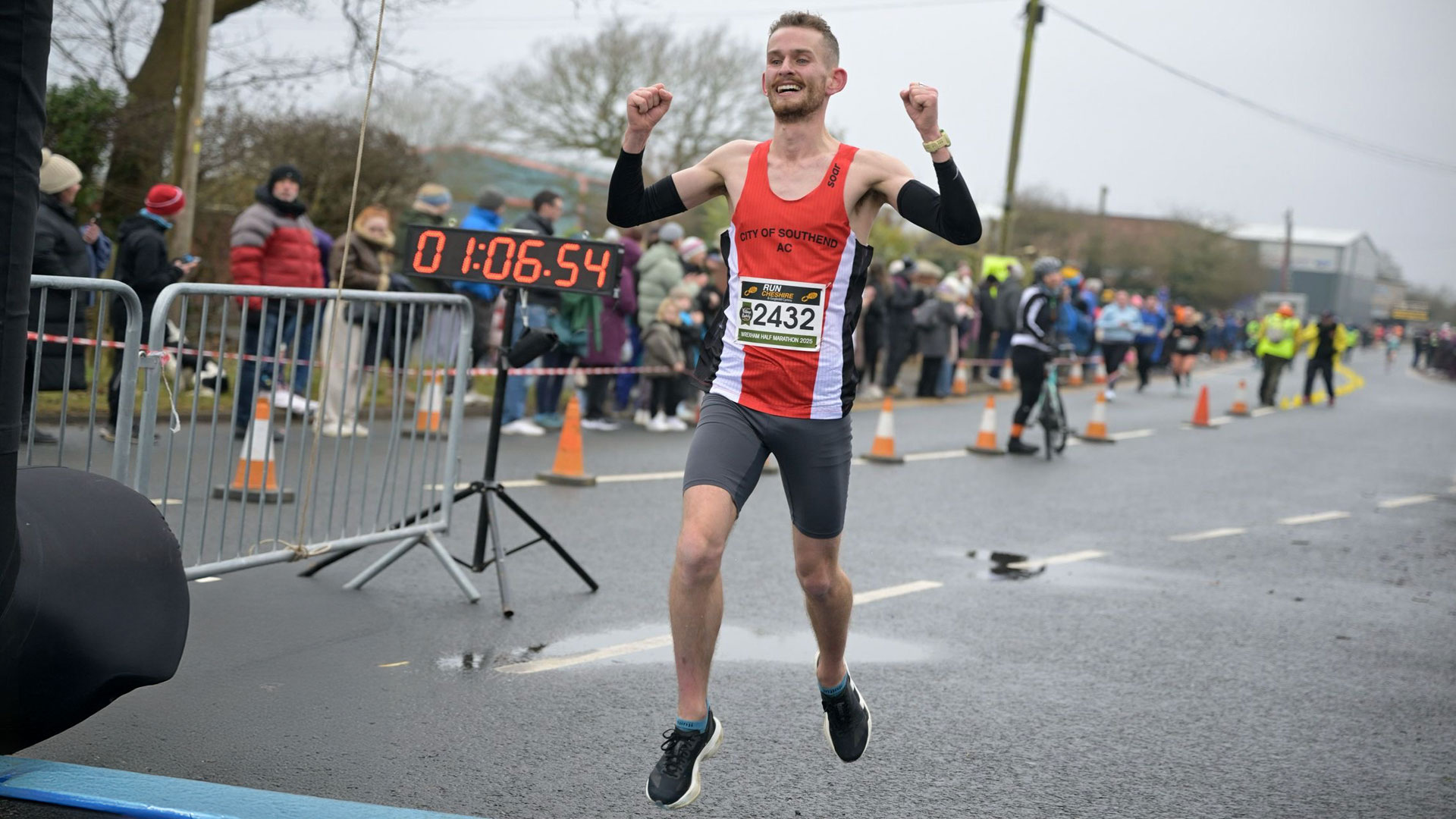
One of the athletes in my group had what I would describe as a breakthrough race last week. In a little under two years, he has progressed his HM time from 1:23 to 1:15 to 1:12 and now 1:09 in successive races, and we are expecting a leap forward of a similar order of magnitude when he next tackles the distance.
Through that progression, we have targeted key development areas, not always in the same priority order, but a balance based on the output of laboratory treadmill tests and our own perception of what is needed. Detailed below are the elements that have driven that progression point by point.
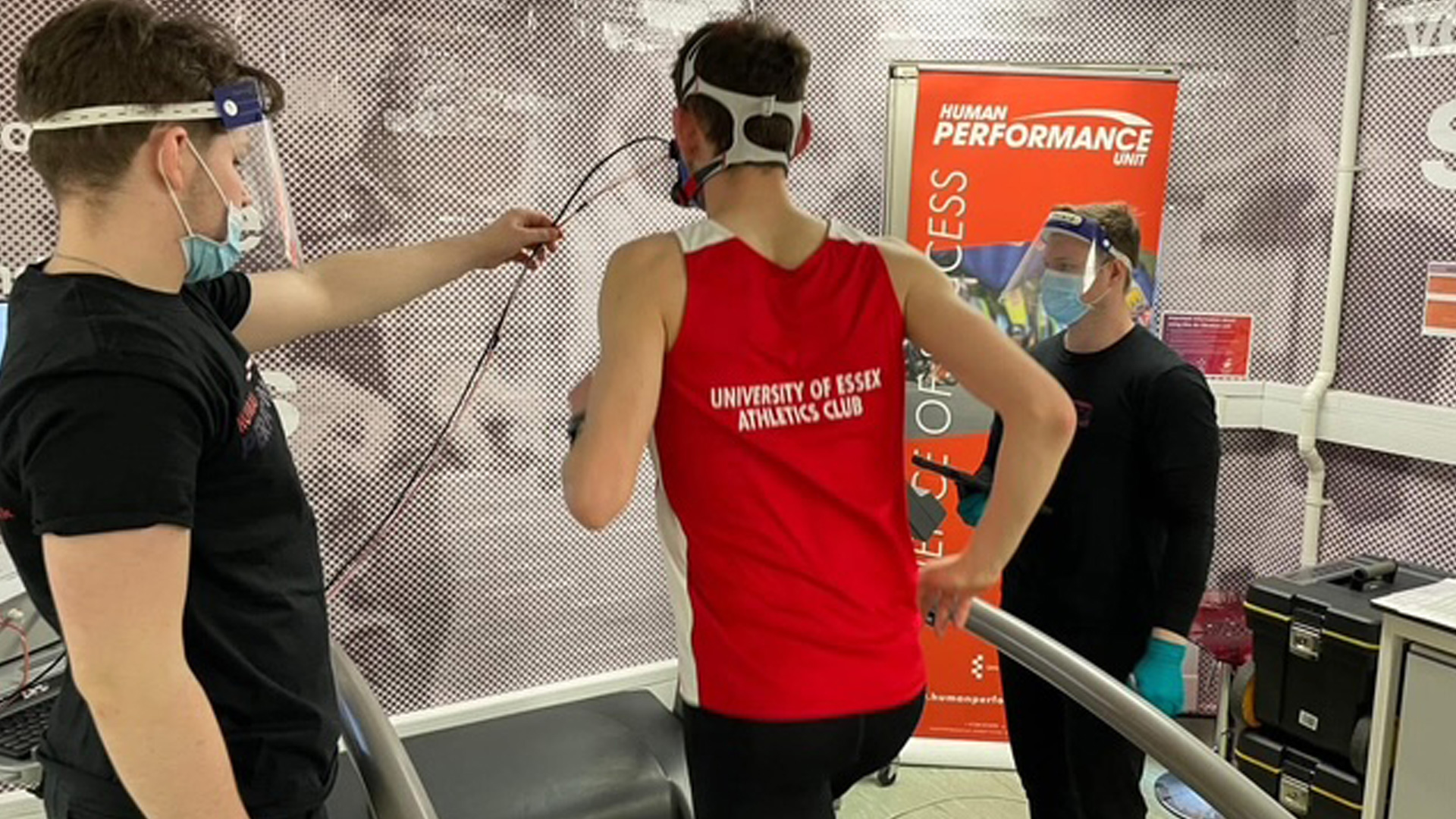
1. Testing (a bit techy this one, apologies)
Every endurance run programme will have a blend of easy running (Z1), steady running (Z2), tempo running (Z3), threshold running (Z4), VO2M running (Z5), and beyond (Z6/7). What the lab testing does is enable us to take the guesswork out of the blend of work that is going to give us the best bang for our buck against both short-term race objectives and longer-term aims.
The HPU at Essex University have been fantastic in enabling Bob to assess 2–3 times per year, and their comparative analysis from test to test has been invaluable. The progressive treadmill test measures relative peak oxygen uptake, absolute peak oxygen uptake and maximal aerobic speed. This allows us to establish Bob’s key submaximal performance thresholds, lactate threshold and anaerobic threshold. For me, the key here is the relationship between those variables and how that correlates to Bob’s racing performance. It is that aligned to racing objectives that enables us to balance his training most effectively.
Whilst physiological testing has been the most significant part of the testing dimension to our engagement as far as we move forward, other testing and analysis mechanisms will become equally, if not more significant. More on that in identifying performance limiters.
2. Progression in training volume
We split Bob’s training year into two: autumn/winter and spring/summer. If we go back two years, Bob progressed over the course of the winter period from 30 miles per week to about 5 miles; this year, that progression has been from 45 miles to 65 miles per week. We approach summer differently. Last year, his summer volume averaged about 25 miles per week, and this year, he will be up to 45–50 miles.
Across both periods, the structure stays the same: he runs easy Mondays and Fridays, he works hard on Tuesdays and Saturdays, and he runs steady and longer Thursdays and Sundays. Wednesday year-round, is a total day off.
In winter, it is either a tempo or threshold session on a Tuesday and VO2 or hills on a Saturday. Summer, the better sessions become race pace aspiration specific, running at an aspirational 3,000m or 5,000m pace on Tuesdays and on Saturdays, it is 1,500m pace sessions with the occasional 800m or sharp hill session thrown in to keep it fresh. As either winter or summer seasons progress, we look to move the dial week by week on the quality workouts, either the total interval distance covered increases or the recovery time between reps or intervals within a session decreases.
This summer, we are also including two gym sessions, one strength and core, the other minimal impact plyometric-based. I think these sessions will help Bob move the dial on his track PBs significantly this summer.
3. Consistency
To this point in the coaching engagement, it has been Bob’s superpower; he is metronomic – his TrainingPeaks is a sea of green! This isn’t about getting lucky, avoiding injury or illness, as an athlete, Bob sets himself up for success. From a coach’s perspective, you know he’ll show up; he never does any less or any more than what has been asked; he just delivers his sessions to the point detail day-after-day.
There are a number of factors here that make him resilient to issues that can sidetrack race plans. He lives well, sleeps, eats, hydrates, and uses recuperative modalities like a professional athlete, which sets him up for success. Interestingly, on the odd occasion over the last couple of years, he’s picked up a cold. We can trace it back to a few days earlier when he’d either taken a long public transport journey or he’d had the stress of a midnight or early hours lifeboat call out.
4. Key sessions
Bob’s training is pretty much zonal. In any given training year, he’ll operate across six or even seven zones, and as you’d expect, when his focus is half-marathon 99% of his effort is spent across zones 1–5, and from a time perspective 80% is spent in zones 1 and 2.
The zones we can also express in terms of feel or race paces. In this cycle, it has been 6–8 run sessions per week with two sessions effectively at either HM, 8–10km, or 3–5km pace. The challenge presented by these sessions progresses over the training cycle, going into the race. When we express it by feel or race pace, this is what Bob’s sessions typically look like.
Easy running: 30–40 minutes at 4:50–5:20 per km
Steady running: 45–120 minutes at 4.10–4:35 per km
HM pace running: 35–60 minutes at 3.14–3:22 per km (example session; wu 6 x 8 minutes off 90 second jog recovery cd)
8–10km pace running: 24–32 minutes at 3:05–3:10 per km (example session; wu 4 x 7 minutes off 2:30 minutes jog recovery cd)
3–5km pace running: (15–20 mins at 2:45–2:56 per km (example session wu 1 x 800m 5 x 400m 1 x 800m 5 x 400m off 1:1 run time recovery)
The above correlates back to the training zones established in the progressive treadmill test.
5. Identifying key limiters
It has been a case of picking off the low-hanging fruit. For the two years of the engagement, we have principally focused on improving Bob’s physiological capabilities and his muscular endurance. We have gradually increased his run volume and focused on those better sessions to improve his aerobic capability.
Central to my own philosophy is that I don’t really go near an athlete’s run technique until they’ve reached a certain level of run maturity. Experience tells me that a runner’s technique evolves naturally as they increase the volume and quality of their running, so unless an athlete has a recurring issue, I leave technique alone to a point!
We have now reached that point with Bob, my view is that the opportunity for improvement now sits equally with improving other physical factors.
a) Biokinetic energy efficiency.
b) Increasing his range of movement.
c) Improving his strength throughout that range of movement.
We are starting to build gradually into two distinct gym sessions, which are both focused on points b. and c. above. One is a lifting and core routine, and the other is a lower-impact plyometric session focused specifically on the areas that will be a huge benefit to Bob. Regarding point a., we will work on a small number of specific technique points that will aid efficiency and speed
6. Data-driven decision making
We are living by numbers, each session will provide thousands of data points, all captured: time, heart rate, pace, cadence, stride length, intensity factor, efficiency factor, aerobic decoupling values, training stress score, hydration level, blood sugar level, blood lactate level. Then, out of training, we are measuring HRV and sleep quality… the list goes on.
I will say this, there is a point where much of the relevance is lost, the information obtained should be considered for the guidance of wise men and the observance of fools.
With all my athletes, we are still very ‘feel’ driven, but we use all of this data to support decision-making and to reduce the guesswork, whether that be bringing recovery forward or pushing it back, whether it be cutting a session short or extending it. Data is in the end the basis that determines the plan, the blend of training and in the large, how we evaluate what has been done. What we are, in effect, doing is getting insight from the information obtained from the data.
With Bob, we track a small number of variables week by week (five or six); these are the numbers that give us a sense of progress or issue, a traffic light system.
On a specific note, I know most coaches and athletes do not pay too much attention to the TrainingPeaks PMC; it is said not to work great for runners, but better for cyclists and triathletes. But… As we have a degree of confidence in the detail around HR, zones and paces, we feed it as our baseline. I find it unnervingly accurate in mirroring how an athlete will be feeling. There is too much to go into on this alone, but it’s providing some great leading indicators around form and potential issues.
A big thanks to those who took the time out to read it – I hope you found it at least half interesting.


05.11.25
What is Lactate Threshold and how does it relate to training?

24.09.25
End of season update for Luke Oliver
12.09.25
Marathon training and performance – cutting the wheat from the chaff
01.07.25
Running a fast half-marathon…

15.06.25
The pursuit of speed – playing the long game

01.06.25
800m, you’ve changed bruv!
01.05.25
Some musings from a week of endurance coaching on the Algarve…

01.04.25
Let’s talk recovery!
01.03.25
Preparing one of my guys for a season over 800m
01.02.25
Big breakthroughs and higher-level performances do not happen by chance.
01.11.24
Ironman Barcelona – It doesn’t always go to plan
1 / 5